


Skip to content
About the institute

Education that reaches real life

Dar Al-Karimah exists because knowledge without practice changes very little — and practice without knowledge has no direction.

Our vision

To raise a generation of women who are firm in their deen, capable in the world, and generous with what they know — women whose learning is visible in their worship, their households, their work and their communities.

Our mission

To deliver an accessible, three-year Open and Distance Learning programme that teaches Islamic knowledge and practical, worldly education together; to assess learning by what students can do rather than what they can recall; and to prepare every graduate for dignified, self-reliant work and service — without asking her to choose between her deen and her capability.

وَقُل رَّبِّ زِدْنِي عِلْمًا

Line illustration of an open book, laptop, notebook, lamp and plant on a study desk
Educational philosophy

Learn → Understand → Practice → Apply → Reflect

Our five-stage model is not a slogan. It determines how lessons are written, how time is allocated and how students are graded.

An open classical Islamic book on a wooden desk beside stacked volumes, a globe and a brass lantern
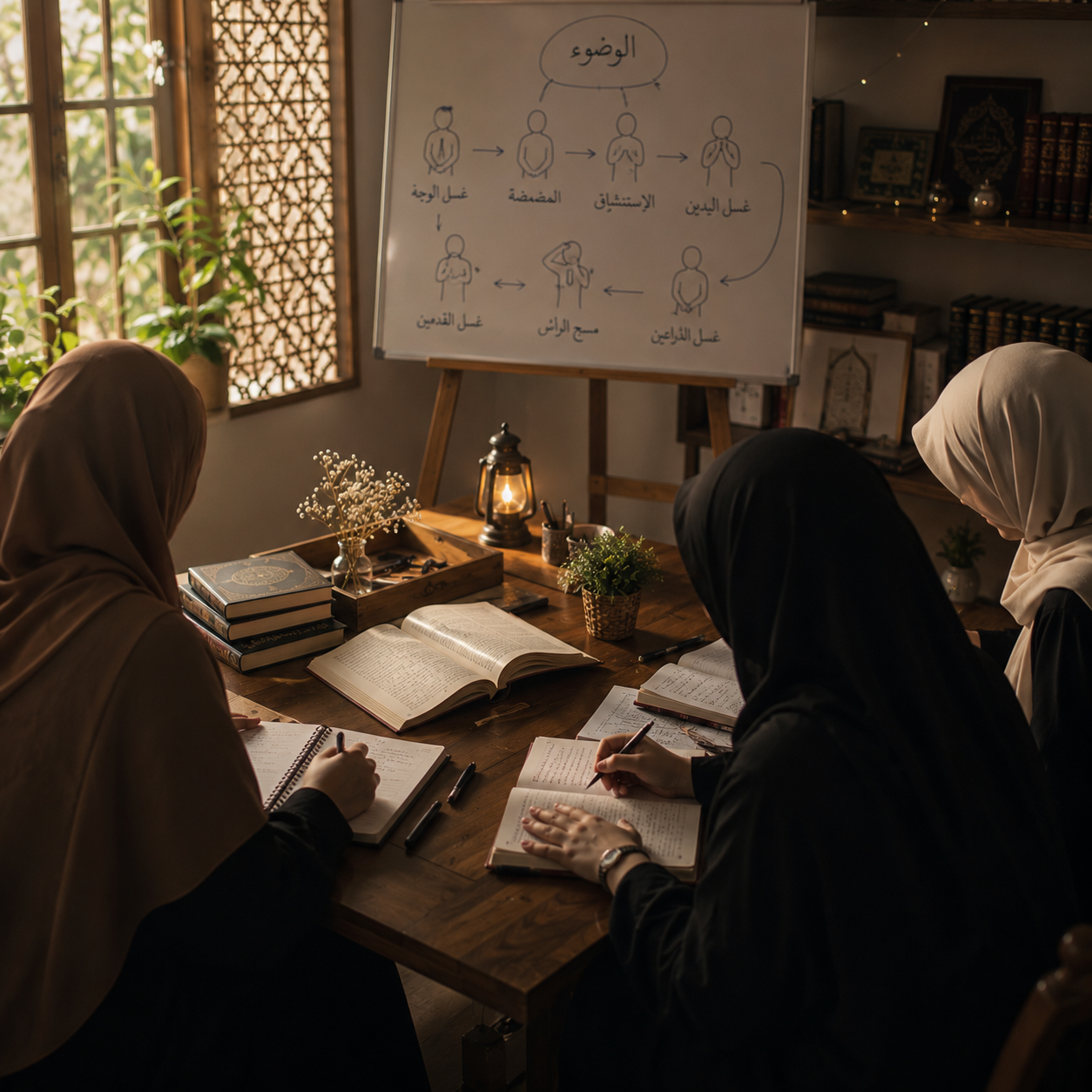
Students taking notes around a wooden table while an Arabic diagram of wudu is explained on a whiteboard
A student writing notes from an open Islamic text beside a lantern and flowers at a sunlit desk
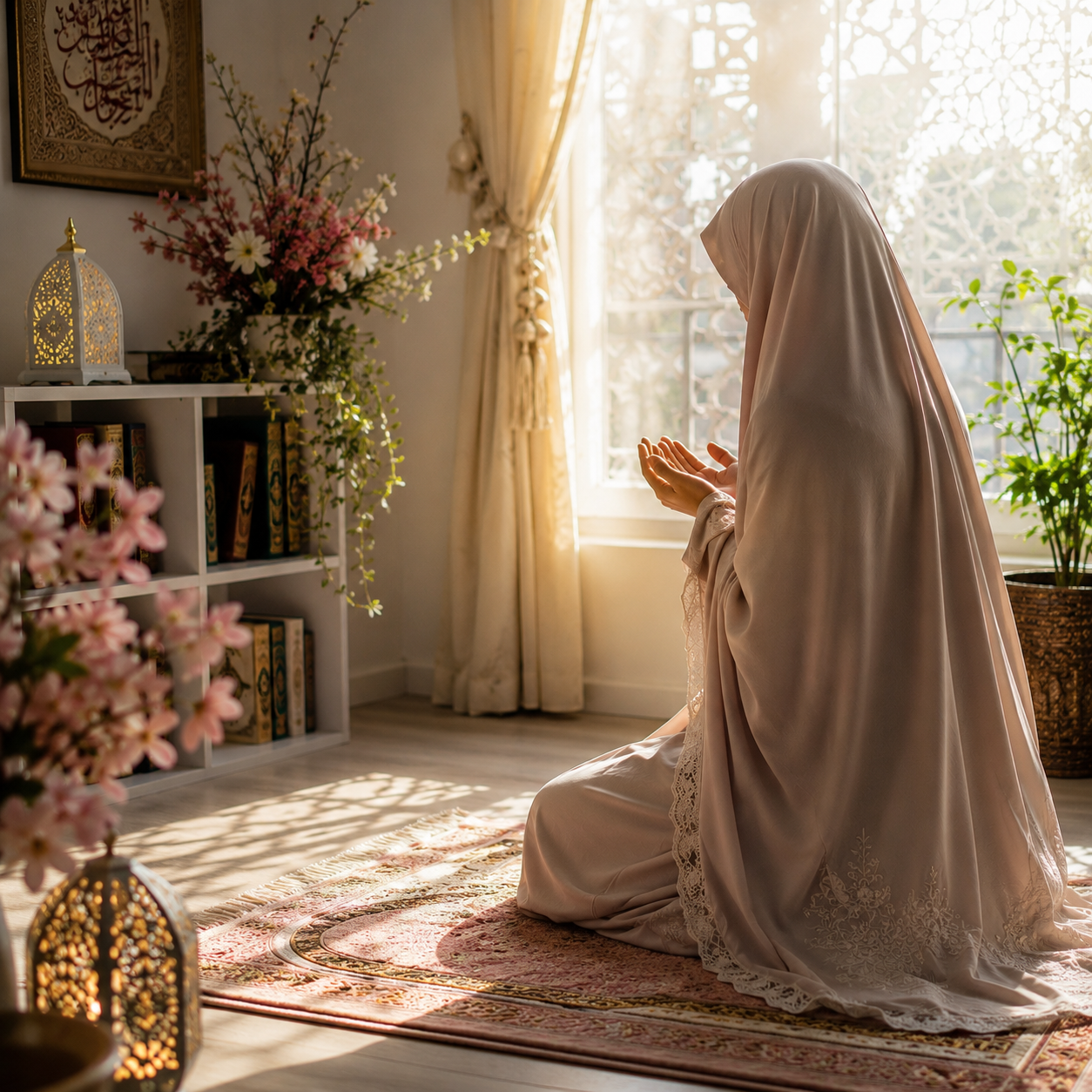
A woman making dua on a prayer rug in a sunlit room with a bookshelf of Islamic books
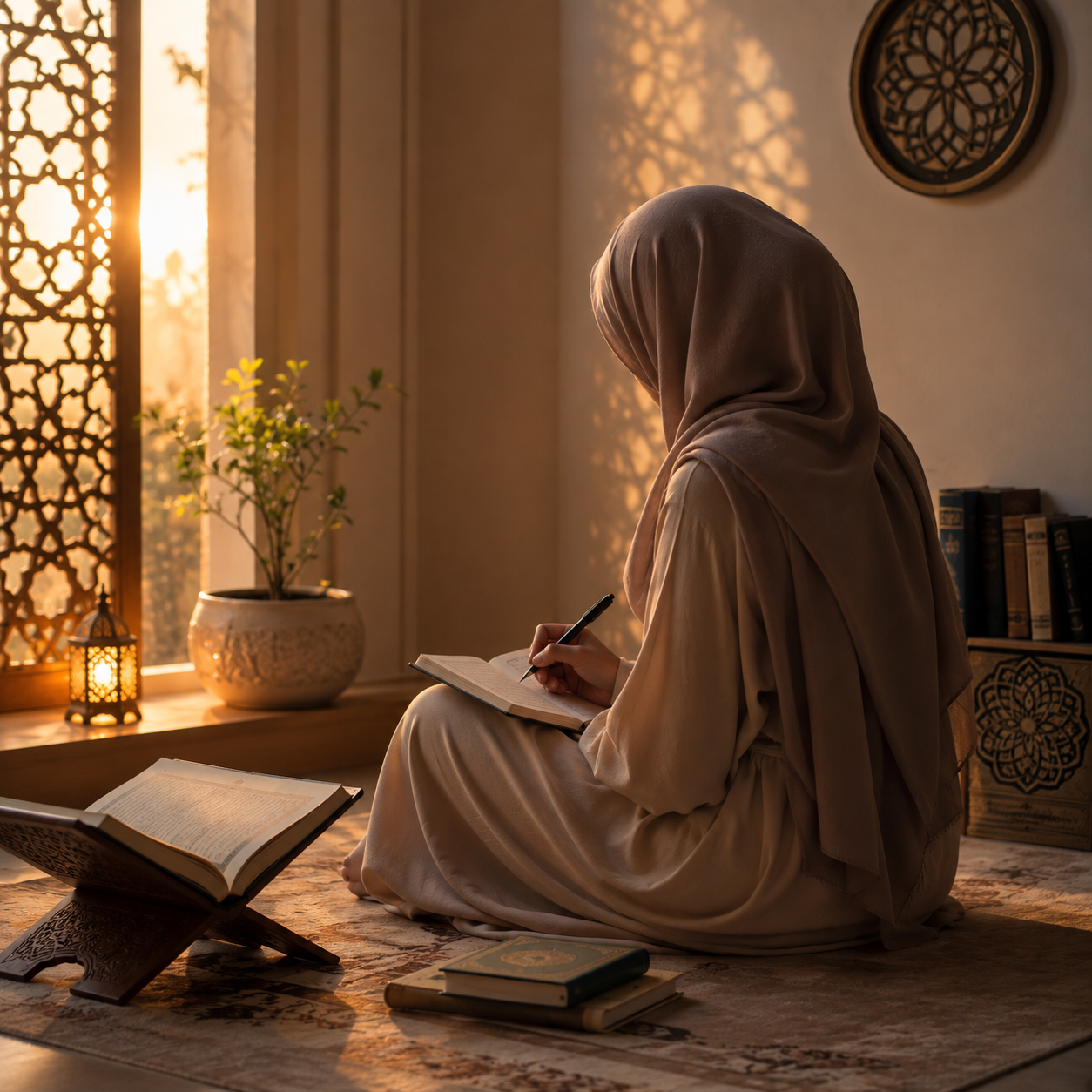
A woman writing in a journal on a patterned rug at sunset beside a Quran on a wooden stand

1. Learn

Structured lessons in Islamic and worldly subjects, taught with clarity and depth.

Learn

Structured lessons in Islamic and worldly subjects, taught with clarity and depth.

Teaching begins with clear, sequenced instruction. Our teachers do not read from a syllabus; they build a subject deliberately, checking that each foundation is secure before adding to it. Materials are prepared for a mobile screen and short, focused attention.

Understand

Discussion, questioning and context so knowledge is grasped, not just memorised.

Understanding is tested by explanation. Students are asked to restate rulings in their own words, to trace the reasoning behind an opinion, and to ask questions freely in a setting where questions are welcomed rather than tolerated.

Practice

Guided exercises and demonstrations that turn understanding into skill.

Skill needs repetition under supervision. A student who has studied the Fiqh of purification performs it and is corrected. A student learning lesson planning writes plans and receives written feedback. Practice happens in the presence of a teacher.

Apply

Real-life assignments in the home, community and workplace.

Application takes learning out of the classroom entirely: a household budget built on the principles she studied, a children's circle taught at her local masjid, a real client brief completed in her design track. This is where knowledge becomes character and capability.

Reflect

Written and spoken reflection that consolidates learning and shapes character.

Every term closes with structured reflection — written portfolio entries and spoken review with a mentor. Students record what they understood, where they struggled, and what changed in their conduct. Reflection is assessed, because it is the stage most often skipped and most needed.

Leadership & faculty

The people behind the programme

Placeholder cards — names, roles and biographies will be published once appointments are confirmed.

[Name to be added]

Founder & Director

[Short biography placeholder — background in Islamic scholarship and education leadership.]

[Name to be added]

Head of Islamic Studies

[Short biography placeholder — qualifications in Quran, Hadith and Fiqh instruction.]

[Name to be added]

Head of Practical Education

[Short biography placeholder — background in vocational skills and career development.]

[Name to be added]

Student Mentor & Welfare Lead

[Short biography placeholder — pastoral care, mentoring and family liaison.]

Accreditation & credentialing

[Accreditation details to be confirmed] Graduates receive a Dar Al-Karimah completion certificate accompanied by a full transcript of subjects studied, practical assessments completed and the capstone project outcome. We are in the process of establishing external credentialing partnerships, and this page will be updated with the exact recognitions as soon as they are finalised. We will not describe a recognition we do not yet hold.